Posts Tagged ‘openflip’
The Flipped Classroom and Personal Learning Networks
My final post for #openflip Spring 2016 includes discussing the fourth facet of a flipped classroom: a personal learning network (PLN).
Professional learning is to become self-aware of one´s personal learning network in how it contributes to a particular experience. A PLN is having the self-knowledge of how learning spaces, groups and networks, and all forms of learning come together at any particular moment and how they adopt and adapt over time. A PLN is about understanding ideas (beliefs, opinions, thoughts, etc.), materials (objects, technologies, etc.), and human relationships (uni/bidirectional communication, strong and weak ties, etc.) not as isolated notions, but as associations that are influenced by each other. In a flipped classroom scenario, a learning network can be viewed at any level: individual, pairs, small groups, whole class, domains, institution, district, community, global, etc., but what makes a PLN personal is that the power and prestige (from a network and not a sociological perspective) are revealed through the understanding of how all ideational, material, and human nodes connect and surround the individual (e.g., student, teacher, etc.). Thus, the individual remains the unit of analysis but cannot be taken out of context. Understanding a PLN (i.e., a learning network at the individual level) becomes a prerequisite for understanding a learning network at the group level, for instance. Understanding a learning network at the classroom network is to understand the learning networks of various groups, pairs, and individuals, etc. Within the context of formal education, an educator has a responsibility in bringing about awareness of student PLNs as well as one´s own PLN. An expert learner is one who has a high level of self-awareness of a purposeful PLN at any given time and how it adopts and adapts over time – a PLN is at the heart of understanding what a flipped classroom is; how it is employed; and how effective, efficient, and engaging it can be for both learner and educator. In order to become adept, one needs to adopt and adapt a PLN.
Flipped Classroom: Intentional vs. Incidental Learning
After watching OpenFlip Spring 2016 Week Three (noon edition) (#openflip, #flipclass), I quickly began feeling lost at the notion of “intentional content” and it´s relevance in the flipped classroom. I actually did not disagree with anything mentioned in the video, except when the term intentional content was mentioned, which would lead to a “what are we talking about” moment. The group discussion quickly forced me to revisit what others said about the third pillar of the flipped classroom (internet search), and then try to relate it to what Ken and others were discussing today…and I think I have it. Just for the record, my discussion about intentional learning vs. incidental learning was recorded yesterday, before having listened to today’s talk. Now, let´s unpack the term, intentional content.
Several definitions around the notion of intentional content seem possible.
- Predetermined (or prepackaged) content available outside of class that serves as input that enables learners to take subsequent syllabus-aligned action.
- Predetermined (or prepackaged) content available outside of class that serves as input that enables learners to take subsequent non-syllabus-aligned action.
- Predetermined (or prepackaged) content available in class that serves as input that enables learners to take subsequent syllabus-aligned action.
- Predetermined (or prepackaged) content available in class that serves as input that enables learners to take subsequent non-syllabus aligned action.
- Student-created content made available outside of class that is a result of syllabus-aligned action.
- Student-created content made available inside of class that is a result of syllabus-aligned action.
- Student-created content made available outside of class that is a result of non-syllabus-aligned action.
- Student-created content made available inside of class that is a result of non-syllabus-aligned action.
Flipped Classroom: Learning Community
This week I share my current thoughts on creating a learning community within the flipped classroom (#openflip, #flipclass)…A learning community stems from both student collaboration and student cooperation. Student collaboration focuses more on the…
Read MoreFlipped Classroom: Learning Community
This week I share my current thoughts on creating a learning community within the flipped classroom (#openflip, #flipclass)…A learning community stems from both student collaboration and student cooperation. Student collaboration focuses more on the…
Read MoreFlexible Learning Spaces
As we enter week one of #OpenFlip Spring 2016, I thought I would create a wiki about my thoughts regarding the four pillars (I call them the four facets) of the flipped classroom. Under its current (rough) form, it offers a slight variation from …
Read MoreFlexible Learning Spaces
As we enter week one of #OpenFlip Spring 2016, I thought I would create a wiki about my thoughts regarding the four pillars (I call them the four facets) of the flipped classroom. Under its current (rough) form, it offers a slight variation from …
Read MoreOpenFlip Spring 2016 Course
Just signed up for OpenFlip Spring 2016, #openflip. Will be thinking about this infograph throughout.Created by Knewton
Read MoreOpenFlip Spring 2016 Course
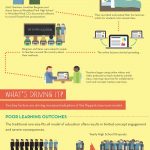
Just signed up for OpenFlip Spring 2016, #openflip. Will be thinking about this infograph throughout.Created by Knewton
Read More